Insulated panels are used in products and structures that must control temperature, add rigidity, protect against environmental conditions, or maintain a consistent finished shape.
These panels often combine exterior facings with a rigid polyurethane foam core. During manufacturing, the foam is dispensed into the panel cavity, where it expands and cures between the surrounding surfaces.
Producing these panels consistently requires careful control. Foam expansion creates heat, gas, and pressure. Without proper support, panel skins can move, edges can shift, and large surfaces can bow or distort.
As the leading U.S. specialist in custom urethane foaming fixtures, presses, and clamp systems, we design and build equipment around the insulated panel application, product geometry, foam process, and production environment.
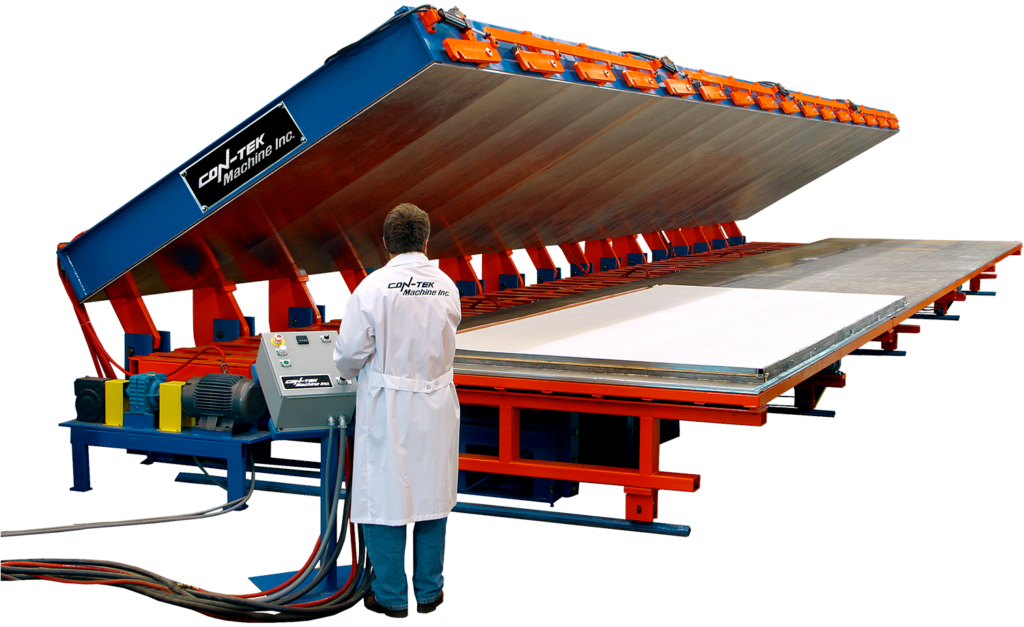
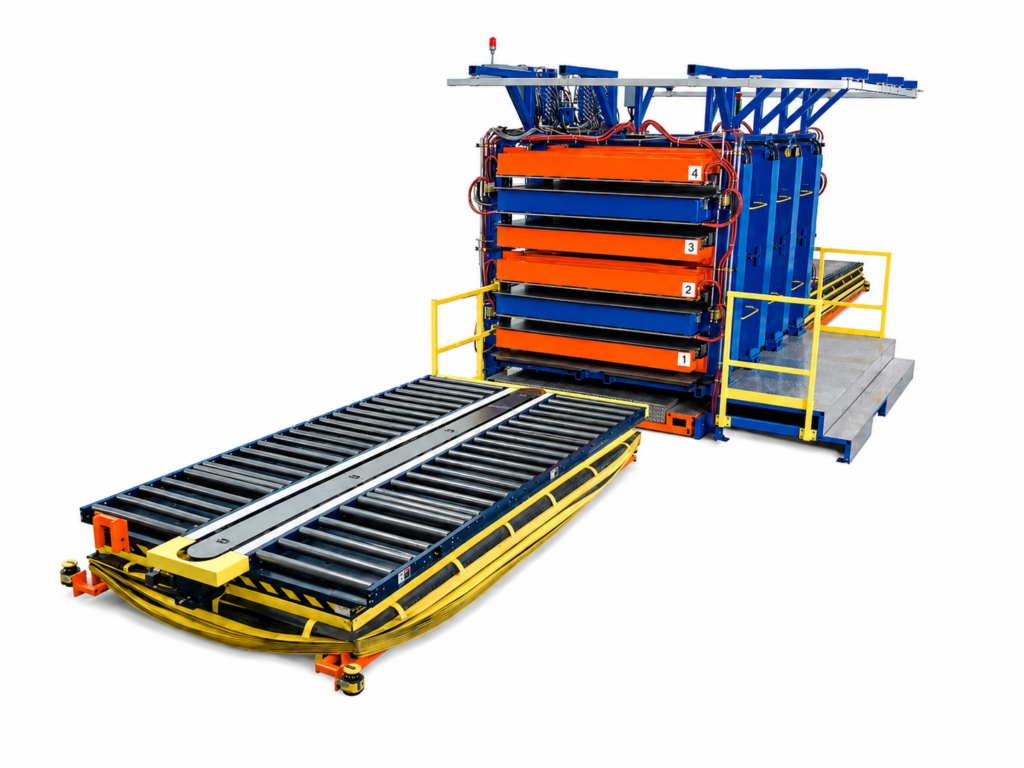
What Is a Polyurethane-Foamed Panel?
A polyurethane-foamed panel is an insulated assembly made by introducing expanding foam between two facings or within an enclosed panel structure.
The facings may be made from metal, plastic, composite material, or another finished surface. The foam fills the internal space and cures into a rigid core that becomes part of the completed panel.
Depending on the application, polyurethane-foamed panels can provide:
- Thermal insulation
- Structural rigidity
- Dimensional stability
- Moisture resistance
- A finished interior or exterior surface
- Consistent panel thickness
- Support for modular construction
A walk-in freezer wall, refrigerated trailer panel, HVAC access door, and insulated equipment enclosure may all use polyurethane foam, but each presents different manufacturing requirements.
Common Panel Foaming Applications
Panel foaming is used across refrigeration, cold storage, transportation, HVAC, door, and specialty enclosure markets.
Walk-In Coolers, Freezers, and Cold Storage
Walk-in coolers, freezers, and refrigerated warehouses use insulated components to form temperature-controlled spaces.
Applications may include:
- Wall panels
- Floor panels
- Ceiling panels
- Insulated doors
- Door frames
- Corner sections
- Tee connectors
- Large cold storage panels
These products often need to fit together as part of a modular system. Panel thickness, flatness, edge geometry, and connection-point alignment can affect installation and enclosure performance.
Large-format panels may require more extensive support because foam pressure acts across a broader surface.
Refrigerated Trucks and Trailers
Refrigerated transportation equipment uses insulated panels to help maintain controlled cargo conditions.
Applications may include:
- Refrigerated truck bodies
- Trailer wall panels
- Trailer-length panels
- Roof sections
- Floor assemblies
- Rear and side doors
These products must often combine insulation, low weight, dimensional accuracy, and durability. Long panels can be especially challenging because their facings must remain supported while the foam expands and cures.
HVAC Panels and Equipment Enclosures
HVAC manufacturers use insulated panels in air-handling units, rooftop equipment, access doors, and equipment housings.
These products may be produced in several sizes within one product family, creating a need for flexible tooling or efficient changeover.
Insulated Doors and Specialty Panels
Polyurethane foam is also used in:
- Walk-in cooler and freezer doors
- Commercial and residential insulated doors
- Garage doors
- Truck and trailer doors
- Industrial access doors
- Equipment enclosures
- Insulated partitions
- Modular structures
- Specialty composite panels
These products may include inserts, frames, hardware locations, reinforcements, and cosmetic surfaces that must remain properly positioned during foaming.
What Happens During Panel Foaming?
Although product designs vary, the general process includes:
- Positioning the panel facings, frame, inserts, and internal components
- Loading the assembly into the fixture or press
- Closing or restraining the product
- Dispensing polyurethane foam into the cavity
- Holding the panel while the foam expands and cures
- Removing the completed product after the required cure period
The equipment must support the panel while internal pressure develops. It must also fit the manufacturer’s loading, unloading, and production workflow.

How Foam Expansion Affects Panel Quality
As polyurethane foam reacts, it expands, generates heat, and applies force to the surrounding surfaces.
Without adequate restraint, manufacturers may see:
- Bowed panel faces
- Uneven thickness
- Shifted edges
- Distorted corners
- Misaligned connection points
- Damaged cosmetic surfaces
- Inconsistent dimensions
- Assembly problems
- Increased scrap or rework
The fixture or press does not replace proper foam chemistry or process control. Its role is to support the product while the reaction takes place.

What Shapes the Equipment Design?
A panel foaming system should be designed around the complete manufacturing process.
Important factors include:
- Panel size, thickness, and geometry
- Facing materials
- Internal frames, inserts, and reinforcements
- Foam formulation and dispense method
- Expansion and cure requirements
- Heating and cooling needs
- Loading and unloading methods
- Production volume
- Product variation and changeover goals
- Plant layout
- Controls and safety requirements
Large or unusually shaped products may require a different press architecture than smaller doors or enclosure panels. Manufacturers producing several panel sizes may need adjustable support, interchangeable tooling, or multi-product capability.
Manual and Automated Panel Foaming Systems
The appropriate level of automation depends on the application.
Manual systems may be suitable for lower-volume production, specialized products, or processes that require frequent operator involvement.
More automated systems may include:
- PLC-based controls
- Automatic sequencing
- Fully interlocked safety systems
- Dispensing-system interface
- Single-cavity or multi-cavity operation
- Heating and cooling features
- Production-line integration
- Fully automated discontinuous production options
These capabilities should be selected according to the manufacturing requirement. Not every application needs the same control package or level of automation.
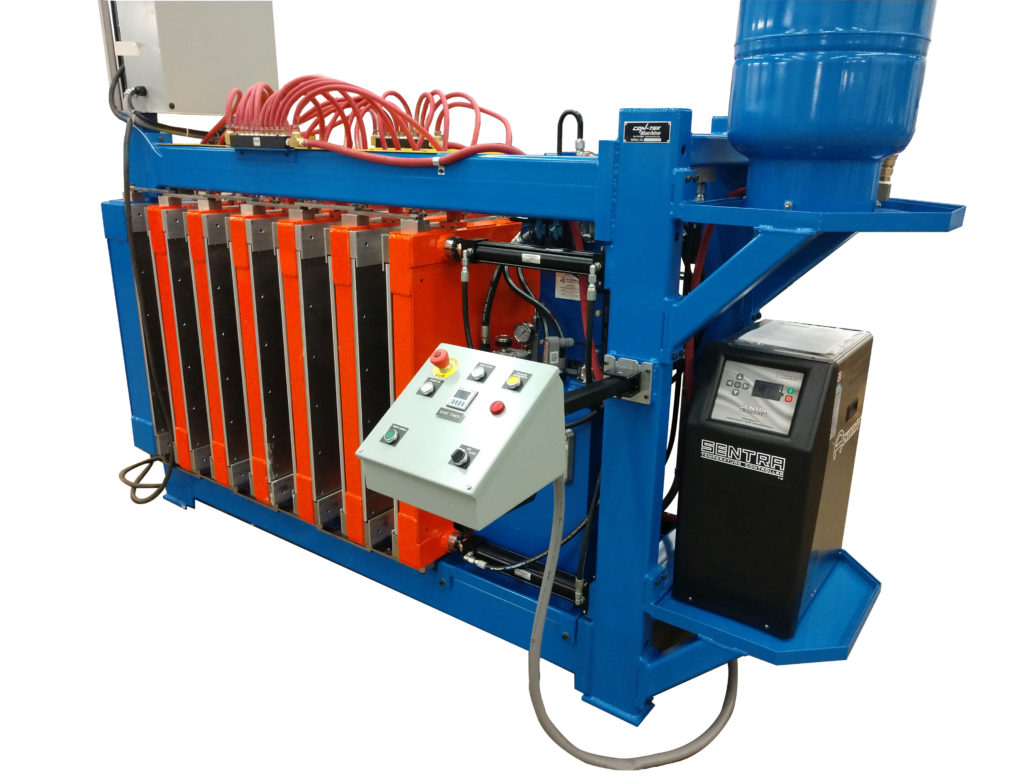
When to Consider a Custom Panel Foaming System
Manufacturers may need engineered-to-order equipment when:
- Standard machinery does not fit the product
- Existing equipment does not provide adequate support
- Panels are bowing, shifting, or losing dimensional consistency
- Large or trailer-length products are being introduced
- Changeovers are limiting production
- Multiple products must run on one system
- Manual handling creates workflow or safety concerns
- Dispensing-system integration is required
- Heating or cooling is needed
- Production volume has increased
The design process should begin with the panel and the production challenge rather than a predetermined machine model.
What Do We Build for Panel Foaming Applications?
We are a Minnesota-based manufacturer of engineered-to-order urethane fixturing equipment.
For more than 40 years, we have designed and built panel foaming systems for manufacturers serving refrigeration, cold storage, transportation, HVAC, door, and related markets.
Depending on the application, our capabilities can include:
- Panel presses
- Specialty presses
- Product-specific tooling
- Single-cavity and multi-cavity systems
- Non-stick-coated facings
- Self-contained heating and cooling
- PLC-based controls
- Automatic or manual sequencing
- Fully interlocked safety systems
- Multi-product support
- Dispensing-system interface
- Stand-alone or production-line-integrated configurations
Each system is designed around the product, foam process, production targets, plant layout, safety requirements, and level of automation.

Frequently Asked Questions About Panel Foaming
Panel foaming is used to manufacture insulated walls, floors, ceilings, doors, refrigerated warehouse panels, walk-in cooler components, truck and trailer bodies, HVAC enclosures, and other rigid insulated products.
Expanding polyurethane foam creates internal pressure. Proper restraint helps prevent panel faces, edges, and internal components from moving while the material expands and cures.
Yes. Depending on the application, a system can include adjustable components, interchangeable tooling, multi-product support, or manual or automated changeover.
Con-Tek Machine designs and builds custom panel foaming fixtures, presses, specialty presses, and tooling for insulated panel manufacturers.
Evaluate Your Panel Foaming Application
The right panel foaming equipment begins with the finished product and the way it is manufactured.
Share your panel drawings, dimensions, facing materials, foam-process requirements, loading method, production targets, changeover needs, plant-layout considerations, and current quality challenges.
We can help evaluate the fixture, press, tooling, controls, and material-handling approach required to support your application.
© 2026 Con-Tek Machine