Polyurethane foam expansion creates heat, gas, and pressure inside an insulated cabinet. The product must remain supported as the foam expands and cures. Without proper restraint, cabinet walls and surfaces can bow, shift, warp, or lose dimensional consistency, affecting cosmetic surfaces, insulation quality, final assembly, and cycle-to-cycle repeatability.
Cabinet foaming fixtures provide controlled support for enclosed and cabinet-style products during this process. For large, flat insulated products such as refrigerated truck and trailer panels, we design panel foaming fixtures and presses rather than cabinet foaming systems.
As the leading U.S. specialist in custom urethane foaming fixtures, presses, and clamp systems, Con-Tek Machine, a Minnesota-based manufacturer with more than 40 years of experience, designs and builds engineered-to-order cabinet foaming equipment around each customer’s product, process, workflow, and production goals.
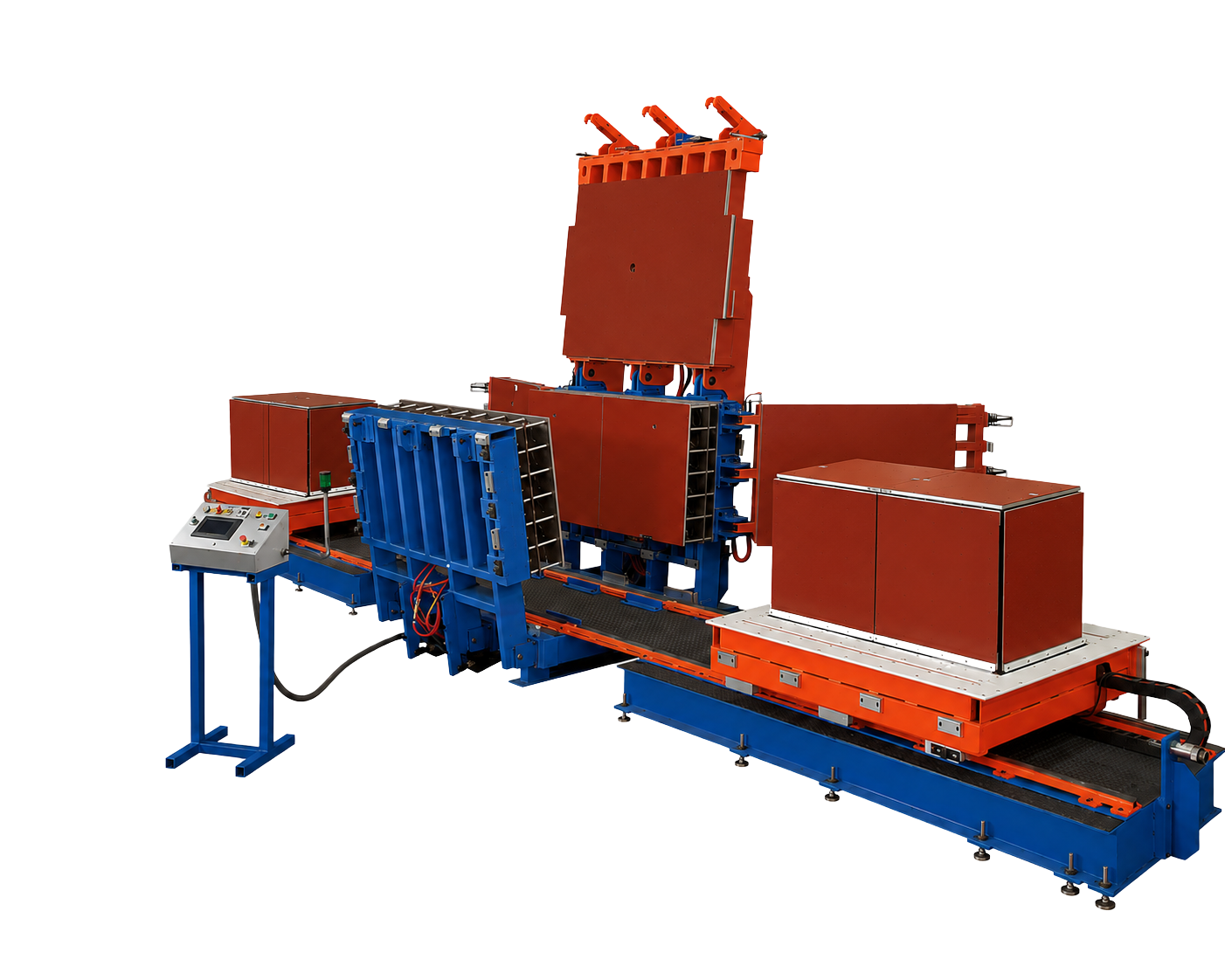
Cabinet Foaming Fixtures for Food-Service Equipment
Food-service equipment includes a wide range of cabinet geometries, openings, work surfaces, and insulated sections. Each affects how the product must be supported while polyurethane foam expands and cures.
Con-Tek designs cabinet foaming fixtures for:
- Reach-in refrigerators and freezers
- Ice makers and ice bins
- Prep counters and prep tables
- Worktop refrigeration
- Undercounter refrigeration
- Back bar coolers
- Beverage stations
- Related insulated food-service equipment
A reach-in refrigerator requires support around cabinet walls and door openings. Ice makers and bins introduce different internal cavities and access points. Prep counters and worktop units combine insulated structures with work surfaces, openings, and refrigeration components.
We engineer the fixture around these product-specific differences.
Cabinet Foaming Fixtures for Commercial Refrigeration and Merchandising Equipment
Commercial refrigeration products often combine insulated cabinet construction with visible surfaces, doors, openings, shelving areas, and components that must align during final assembly.
Applications include:
- Commercial refrigerators and freezers
- Refrigerated display cases
- Glass-door merchandisers
- Bottle coolers
- Milk coolers
- Beverage coolers
- Wine coolers
- Vending machines
- Evaporator coil housings
Merchandisers, display cases, and vending machines put large door openings and cosmetic exterior surfaces on the sales floor. During foaming, the fixture holds the front opening square and in plane so doors, gaskets, and glass-door frames align at final assembly. Wiring and tubing routed through the insulated cavity also have to stay in position while the foam expands.
Cabinet Foaming Fixtures for Laboratory and Medical Refrigeration
Laboratory and medical refrigeration often runs at lower temperatures than food-service or commercial equipment, and the cabinets are built to match.
Con-Tek designs cabinet foaming equipment for:
- Laboratory refrigerators
- Laboratory freezers
- Subzero medical freezers
- Subzero cabinets typically have thicker insulated walls than standard refrigeration. Thicker walls mean more foam, more heat during the reaction, and a longer time in the fixture before the cabinet can be released. The fixture has to hold wall flatness and door-opening dimensions through that longer cure, with heating and cooling where the process requires it.
Cabinet Foaming Fixtures for Residential Refrigerators and Freezers
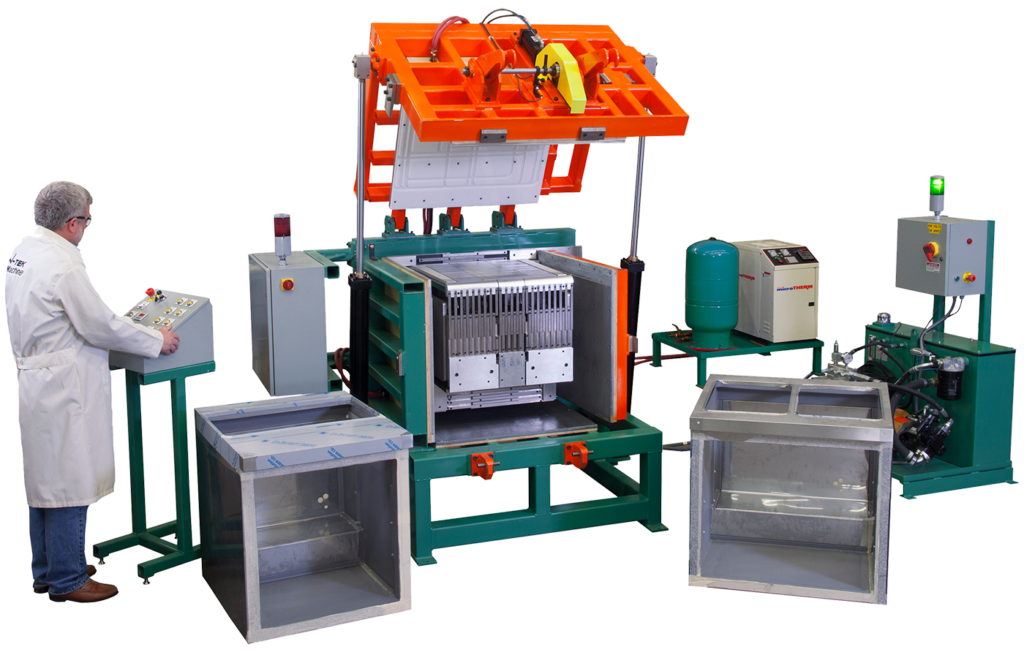
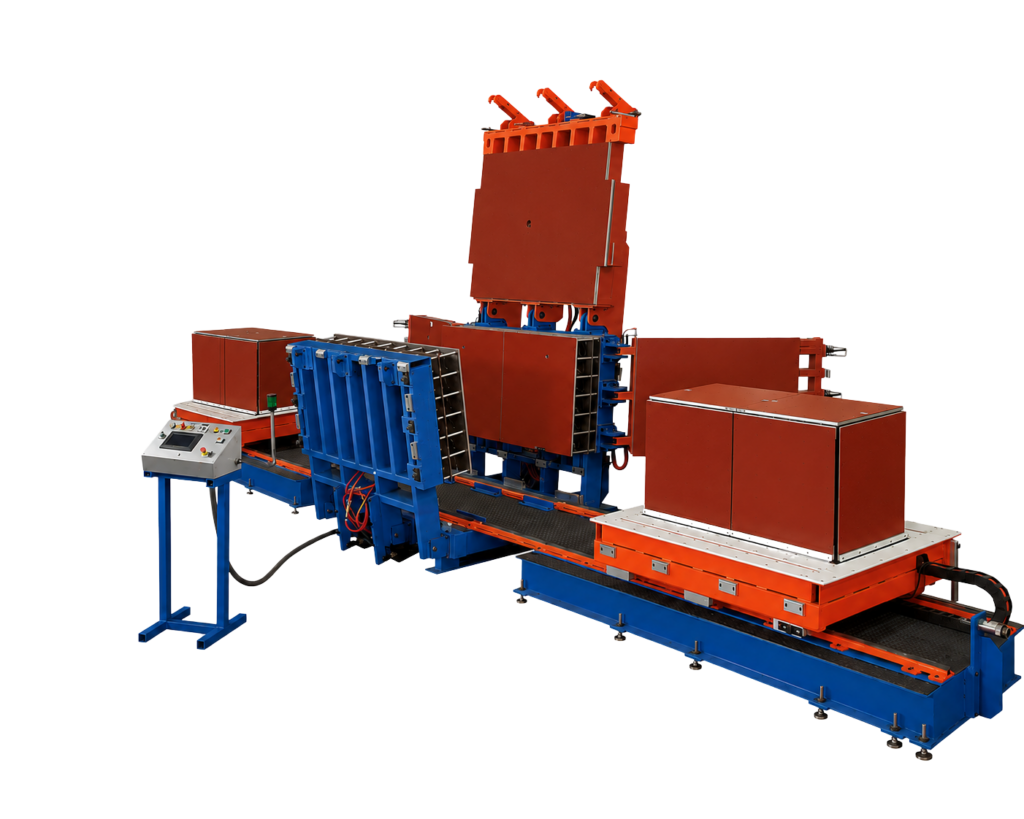
Residential refrigerators and freezers are typically built with a thin thermoformed plastic liner inside a steel outer wrapper. During foaming, the liner is the most flexible surface. Without internal support across its full area, foam pressure pushes it inward and distorts the interior.
Con-Tek designs cabinet foaming equipment for:
- Residential refrigerators and freezers
- Related insulated appliance cabinets
Full-support cores hold the liner in shape while the outer fixture restrains the wrapper. Appliance lines also tend to run high volumes across several models on a shared platform, so changeover time is part of the fixture design.
Cabinet Foaming Fixtures for Portable Refrigeration and Insulated Containers
Portable coolers, portable refrigerators, and insulated containers often have geometries that differ substantially from upright refrigeration cabinets.
Those shapes create different support, restraint, and loading requirements during polyurethane foam expansion.
Con-Tek engineers these fixtures around the actual product shape, insulated cavity, foam process, support points, loading method, and production workflow rather than applying a standard cabinet configuration. Coolers and insulated containers are typically built from molded plastic inner and outer shells, and thin plastic deflects more easily than steel. The fixture supports both shells across their surfaces and keeps molded-in features such as hinge points, latches, and drain ports aligned. Lids are separate insulated parts with their own support requirements.
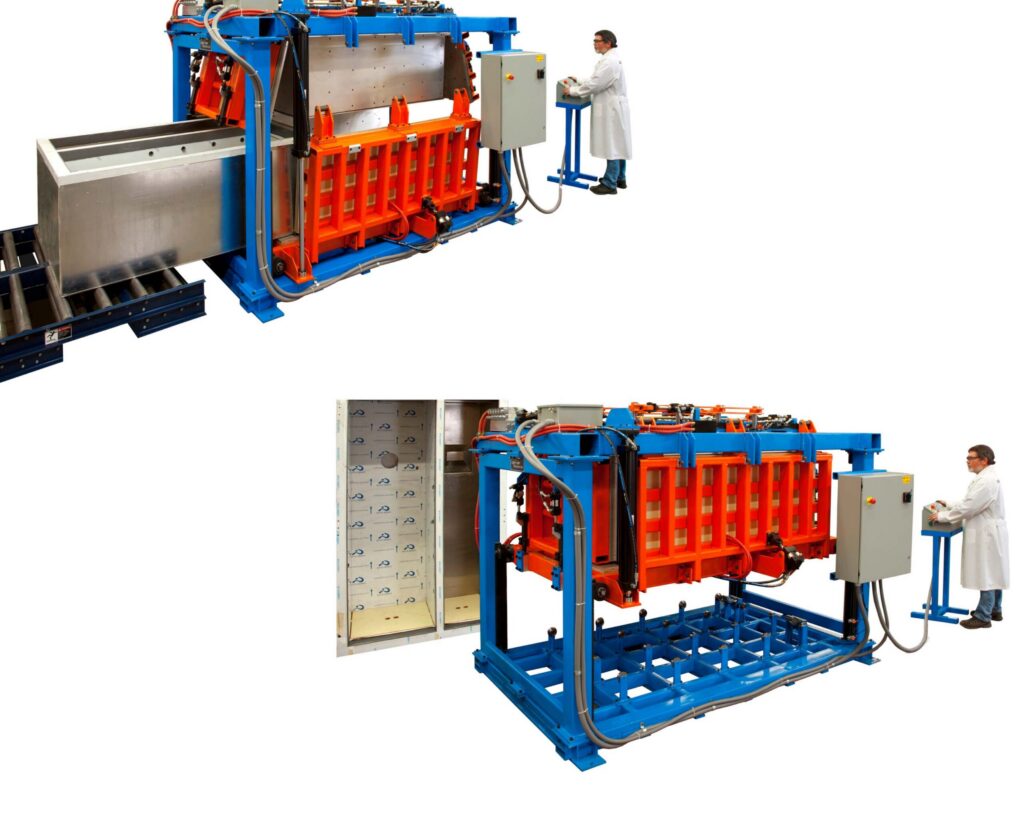
How Con-Tek Designs Around the Cabinet Foaming Application
The product application is only the starting point.
Two manufacturers producing similar refrigeration or food-service products may require very different foaming systems because their products, plants, production volumes, and workflows are different.
We evaluate:
- Product size and geometry
- Areas requiring support
- Cosmetic surface requirements
- Foam-process requirements
- Loading and unloading method
- Production volume and cycle requirements
- Number of product models
- Changeover requirements
- Plant layout
- Heating and cooling requirements
- Dispensing-system interface
- Controls and automation
- Safety requirements
These factors determine the support architecture, equipment configuration, controls, changeover strategy, and integration with the production process.
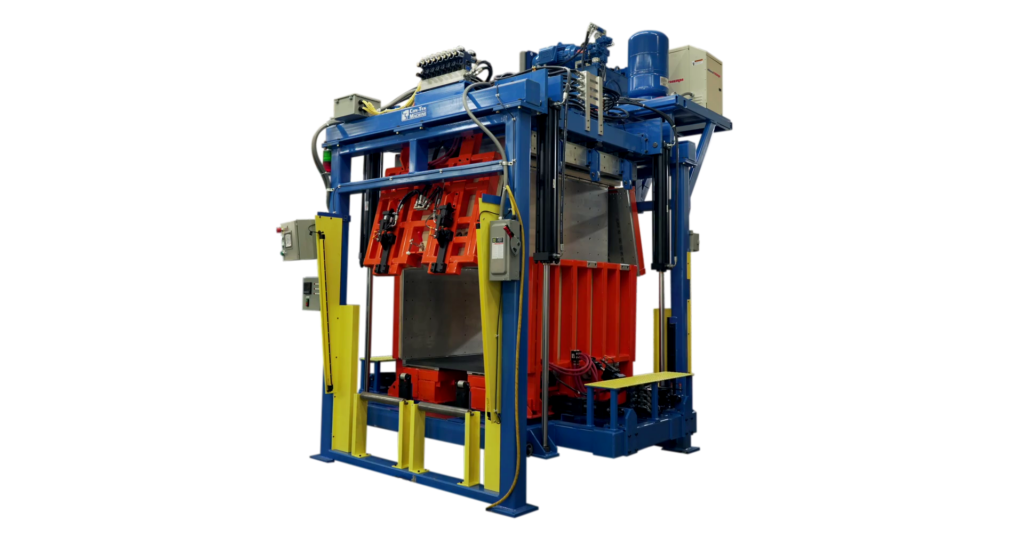
Manual, Automated, and Multi-Product Cabinet Foaming Systems
The equipment configuration should match the manufacturing requirement.
Some applications require a straightforward manual fixture for a single product. Higher-volume operations or manufacturers running multiple cabinet models may require PLC controls, automatic sequencing, heating and cooling, conveyance integration, or model-to-model changeover.
Con-Tek cabinet foaming systems include configurations with:
- Product-specific support and restraint
- Full-support cores
- Self-contained heating and cooling
- Non-stick coated surfaces
- PLC-based controls
- Automatic or manual sequencing
- Fully interlocked safety systems
- Multi-product capability
- Manual or automated model changeover
- Stand-alone or conveyance-mounted configurations
- Dispensing-system interfaces
Multi-product equipment is engineered around the actual differences between models. Each product still requires the support and restraint necessary for repeatable foaming.
Automation follows the same principle. The level of automation matches production volume and product variation.
Con-Tek builds the dry side of the foaming system: the fixtures, presses, tooling, controls, and handling. Metering, mixing, and dispensing equipment is the wet side. When a customer needs a complete system, we partner with wet-side specialists to deliver it as one turnkey solution.
Why Application-Specific Cabinet Foaming Equipment Matters
A reach-in refrigerator, prep counter, ice bin, laboratory freezer, and insulated container may all use polyurethane foam, but they do not place the same demands on the fixture.
Differences in geometry, dimensions, cosmetic surfaces, openings, loading methods, and production requirements determine how each product must be restrained.
Application-specific equipment addresses those differences by supporting:
- Dimensional consistency during foam expansion
- Control of bowing and distortion
- Protection of cosmetic surfaces
- Cycle-to-cycle repeatability
- Practical product loading and unloading
- Model changeover
- Integration with dispensing and automation equipment
- Safe production workflows
The fixture is part of the manufacturing process. Its job is to control the product while polyurethane expands and cures and to fit the workflow required to manufacture that product efficiently and repeatably.
Frequently Asked Questions About Cabinet Foaming Applications
Con-Tek Machine designs and builds engineered-to-order cabinet foaming fixtures for food-service and commercial refrigeration products, including reach-in refrigerators and freezers, ice makers, ice bins, prep counters, worktop refrigeration, undercounter units, back bar coolers, refrigerated display cases, and related polyurethane-foamed products.
Yes. Con-Tek Machine designs cabinet foaming equipment for laboratory refrigerators and freezers, subzero medical freezers, residential and commercial refrigerators and freezers, portable refrigeration products, insulated containers, and other enclosed polyurethane-foamed products.
Yes. Con-Tek designs multi-product cabinet foaming systems with manual or automated model-to-model changeover. Product variation, production volume, floor space, workflow, and changeover requirements determine the system configuration.
Need a Cabinet Foaming System for a Specific Product?
Con-Tek Machine designs and builds custom cabinet foaming equipment, from single manual fixtures to automated multi-product systems.
If you manufacture food-service equipment, commercial refrigeration, laboratory freezers, appliances, portable refrigeration products, insulated containers, or another polyurethane-foamed cabinet product, bring us the product specifications and production requirements.
We design the equipment around how that product is actually manufactured.